Collection · Notebook entry
A short walk through eight centuries of Dutch material life.
The Rijksmuseum's permanent collection runs from medieval altar pieces to twentieth-century furniture. Most visitors see only the Gallery of Honour. The rest of the building, taken slowly, can fill three afternoons.
The permanent display is organised by century, on four floors. It is possible to walk it chronologically, beginning in the medieval rooms on the basement level and ending in the small twentieth-century rooms upstairs. Most visitors do not do this. Most arrive, take the escalator to the second floor, see The Night Watch, and leave. What follows is a short list of rooms I have come to like best, in the order I now walk them.
Floor 0 · The Middle Ages and the Renaissance
The medieval galleries are quiet, dim, and almost no one is in them. They contain three centuries of altar pieces, devotional carvings, illuminated manuscripts and ceremonial silver. The objects are small, the light is low, and the silence in the rooms is one of the museum's most underrated pleasures. Spend twenty minutes here on the way in; almost no one else does.
Floor 1 · The eighteenth and nineteenth centuries
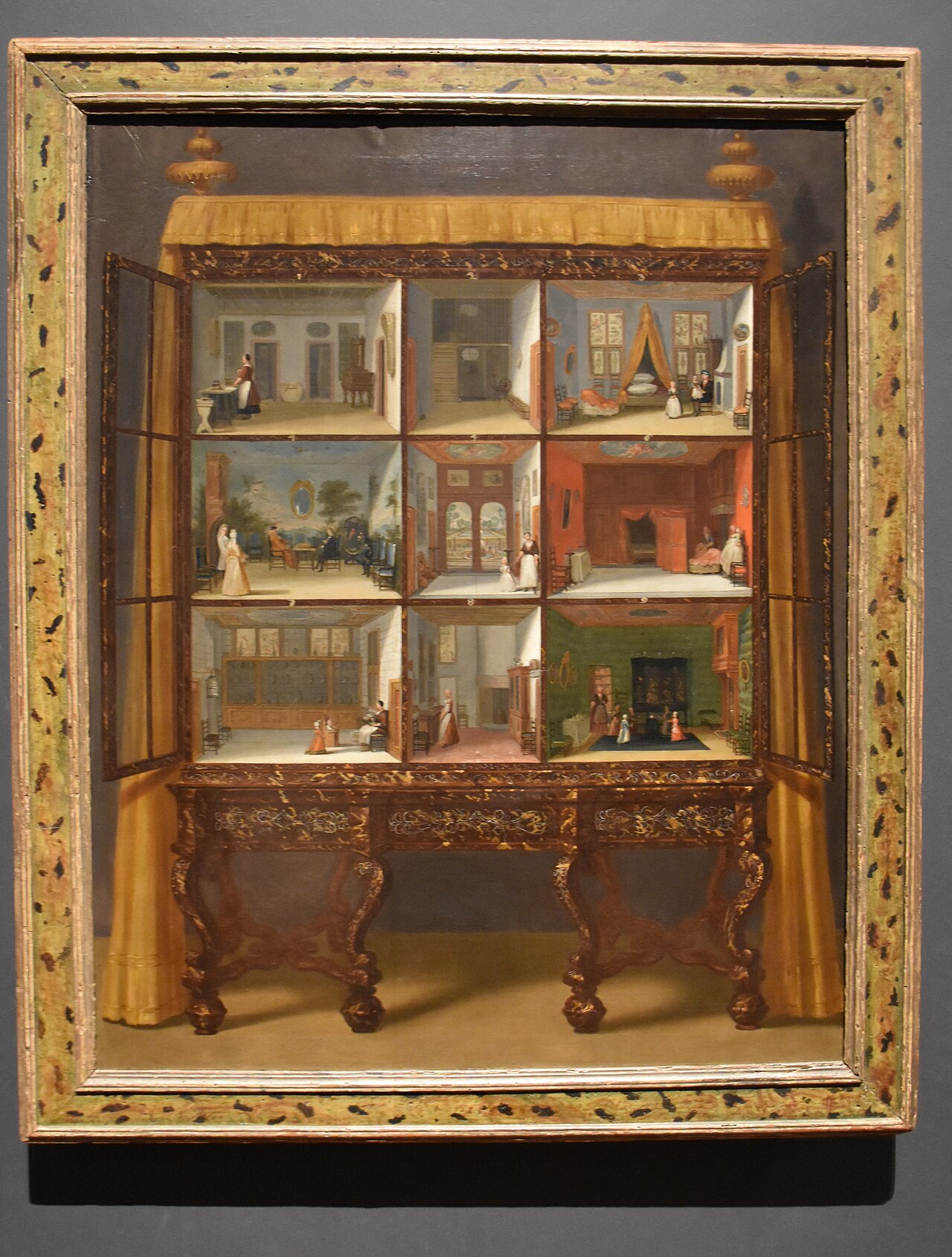
The first floor is where the dolls' houses live. Petronella Oortman's house, built around 1686, is a real domestic interior assembled at one-ninth scale by craftsmen who used the same materials they would have used full-size. The miniature porcelain was fired in Delft and painted under a magnifying glass. The miniature paintings on the walls were commissioned from actual painters of the period. The whole house cost roughly as much as a real house on a canal.
The same floor contains the rooms devoted to the Dutch nineteenth century — landscapes, marines, history paintings, and an entire room of Breitner's Amsterdam street scenes. Breitner painted the city more like a journalist than a romantic. His umbrellas, his snow, his crowded canal bridges all feel reportorial. They are perhaps the best portrait the museum holds of the city as it was just before the building itself opened.
Floor 2 · The Gallery of Honour
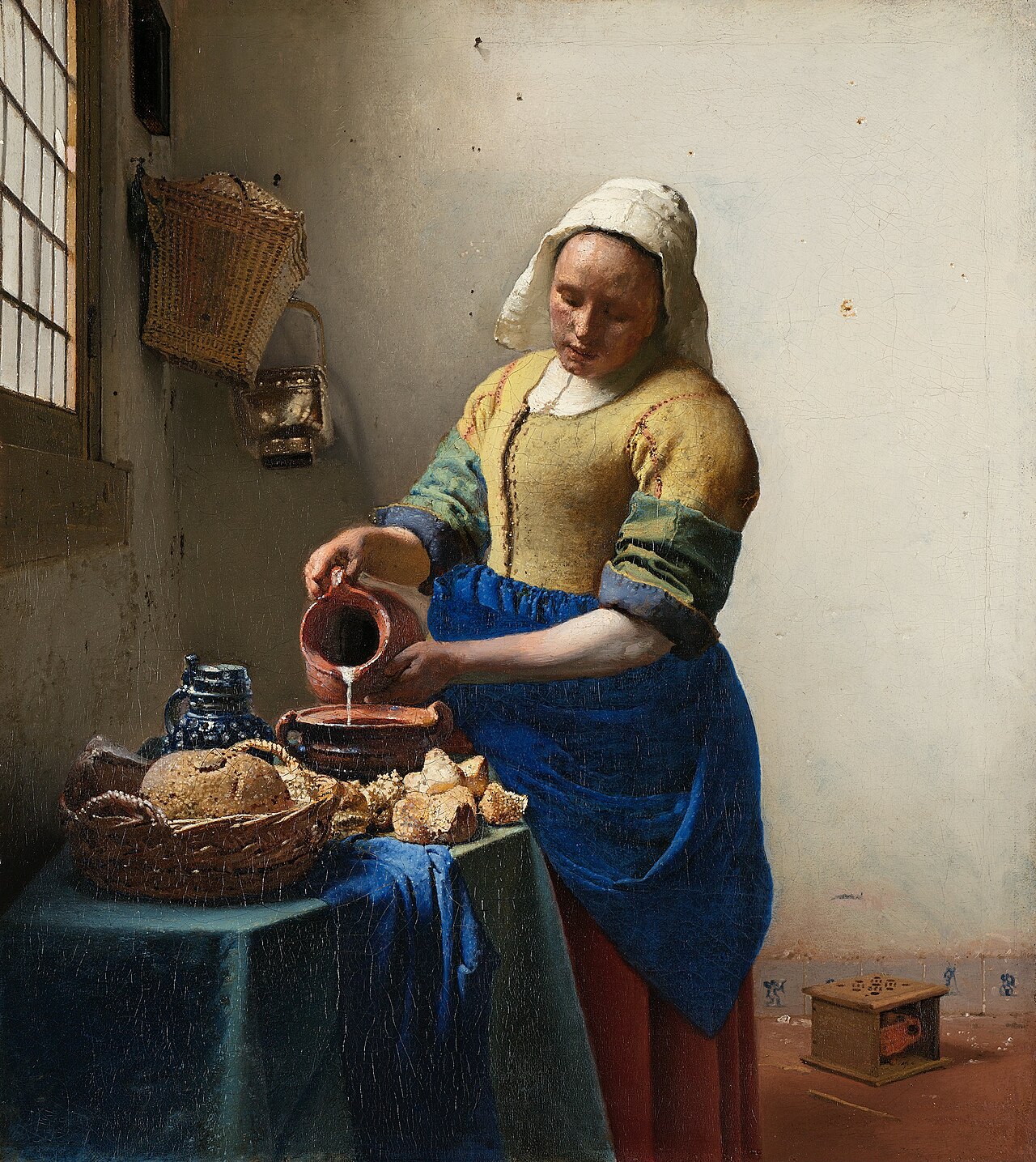
This is the room most people come to see. The long axis runs from the Great Hall at one end to The Night Watch at the other. Along the sides are recessed cabinets, each containing one or two key paintings from the Dutch Golden Age. Vermeer's Milkmaid, Street in Delft and Love Letter hang together in one of these cabinets, halfway down. A few paces further along, Frans Hals's Merry Drinker watches the corridor with a knowing eye.
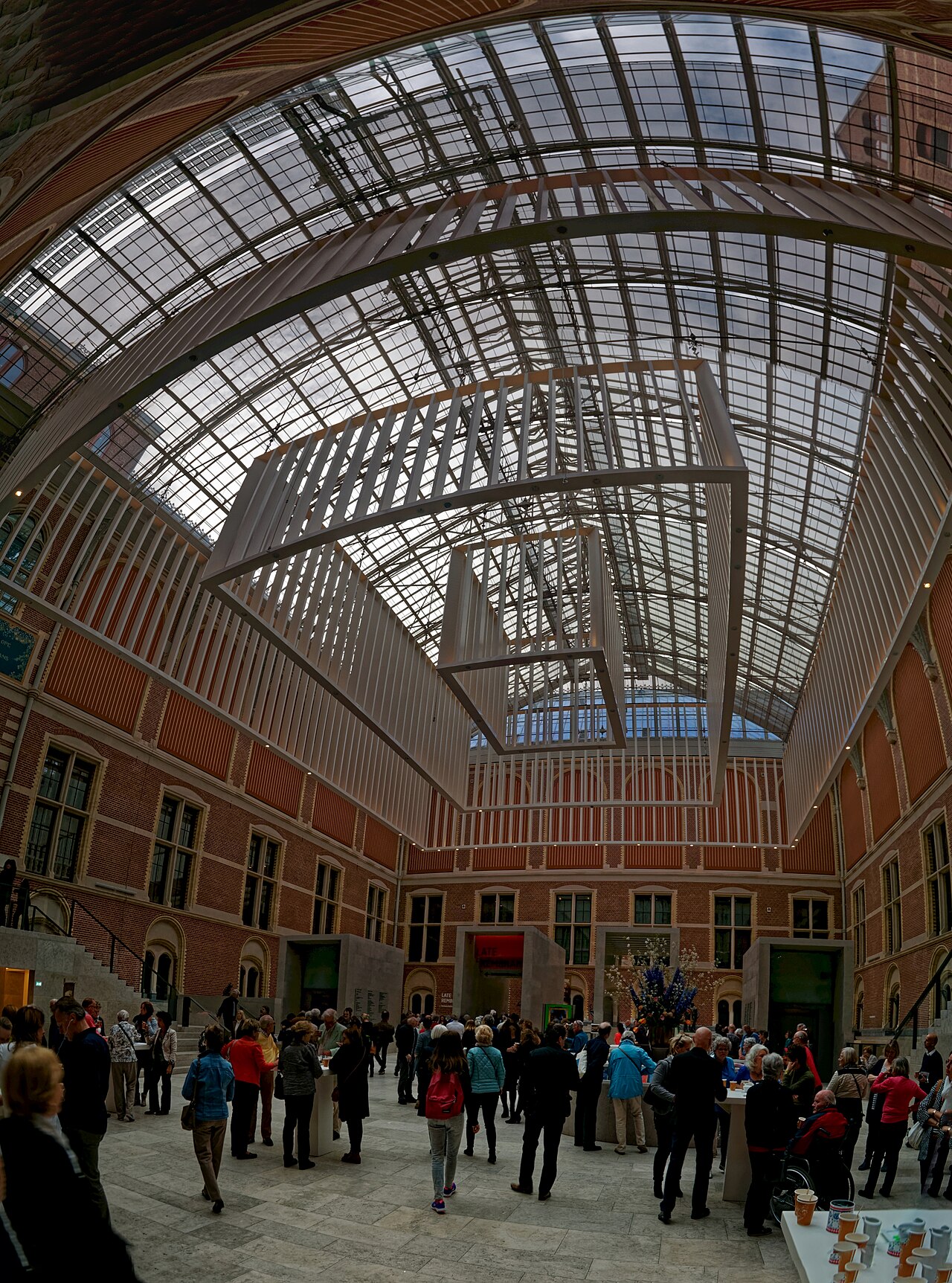
It is worth standing in this gallery without looking at any one painting for a while. The room is itself a designed object. The vaulted ceiling is hand-painted in the manner of a medieval cathedral. The light comes from above and from the sides, and it is possible to see how Cuypers wanted the building to feel: not as a neutral container for the art, but as a frame for it — a very large reliquary for the Dutch seventeenth century.
Floor 3 · Twentieth century, applied arts and the Asian Pavilion
The upper floor is the part most often missed. It holds an excellent and concise survey of Dutch twentieth-century design — chairs by Rietveld, a wing of De Stijl works including Mondrian's small early studies, posters, ceramics, even early radios. The Mondrian room is quiet by lunchtime; the chair design rooms, almost always empty.
Outside the main building, through a glass corridor that crosses the museum's interior courtyard, is the Asian Pavilion. The pavilion was added in 2013 by the architects Cruz y Ortiz. It is a small building, two floors, with one large room on each. The downstairs room is dim; the upstairs room is filled with daylight from above. The objects on display run from a fourth-century Buddha to nineteenth-century Japanese woodblocks. The Buddha sits on a low plinth, alone in the middle of the floor, and it is one of the most peaceful rooms in the museum.
A short list of less-seen objects
Items I would point a returning visitor toward, on a second or third trip:
- The reconstructed Renaissance pharmacy — on Floor 0, just past the medieval altar pieces.
- The Cuypers Library — the museum's own research library, visible from a balcony on Floor 2. Open only to scholars, but worth seeing through the glass.
- The seventeenth-century dolls' house of Sara Rothe — quieter than Oortman's, smaller, less famous, and somehow more affecting.
- The room of paintings by women of the Dutch Golden Age — a small recent re-hang on Floor 2.
- The garden, which is free and open even when the museum is closed, and which contains a small bee hotel.
Next entry: Cuypers, and the long renovation — on the building itself.